Written by: Ronnie Gonenc
You rely on your smartwatch as a silent guardian of your health. It tracks every heartbeat and sleep cycle with supposed precision. But have you noticed your heart rate spiking while you are sitting still? Perhaps your blood oxygen levels look suspiciously low. You are not alone.
In 2026, we are seeing a massive uptick in “sensor blindness.” This phenomenon happens when high-tech wearables lose their ability to “see” through the skin. I have spent years performing other device repairs. I see firsthand how environmental wear and calibration drifts turn a $500 health tool into a digital bracelet. Restoring that accuracy requires more than a software update. You must understand the delicate relationship between hardware and human biology.
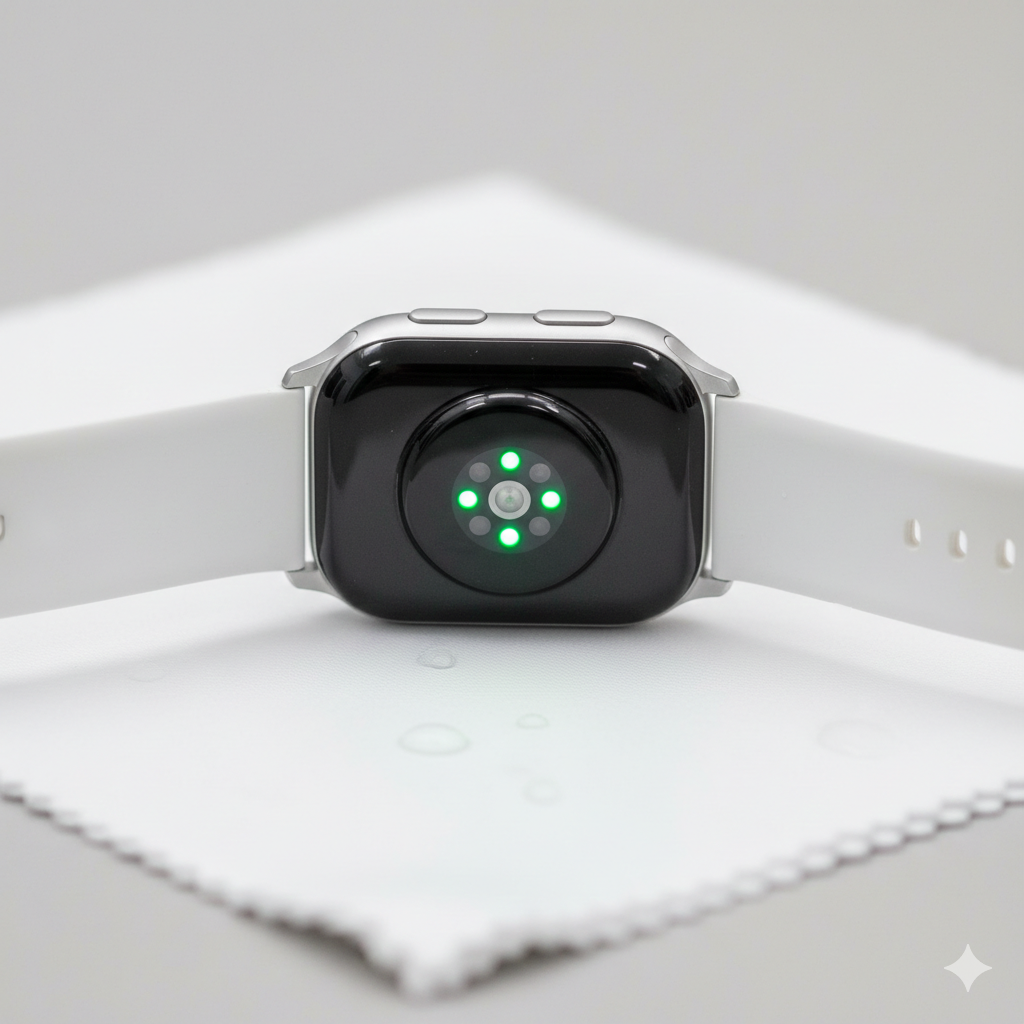
Section 1: [The Science of Smartwatch Sensor Accuracy] Most modern smartwatches use Photoplethysmography (PPG) sensors. These sensors shine green or red light into your tissue. They then measure the light scatter to determine your blood flow. However, several factors in 2026 complicate this process.
Invisible Physical Barriers
Micro-scratches on the zirconia or sapphire crystal backplate often cause issues. These scratches are invisible to the naked eye. Yet, they refract sensor light and create “noisy” data. Additionally, bio-films accumulate over time. These layers of sweat, dead skin, and oils create a barrier. This barrier dulls the sensitivity of the sensor.
Why Distance Matters
Expert research shows that even a slight deviation in the sensor-to-skin seal causes a 30% margin of error. This significantly impacts heart rate variability (HRV) readings. Proper contact is essential for precision.
Section 2: [Identifying Symptoms of Sensor Decay] Sensor failure is rarely a total blackout. Instead, it is a slow degradation of quality. If you experience these symptoms, your device is likely struggling.
Common Signs of Inaccuracy
- The “Flatline” Effect: Your heart rate stays at a specific number despite physical exertion.
- Erratic Spiking: You see a 180 bpm reading while simply walking to the kitchen.
- Ghost Notifications: Your watch claims it is not on your wrist when it clearly is.
We often see these issues during smartphone repairs. Ambient light sensors often fail due to internal dust or adhesive degradation. In wearables, the stakes are much higher. This data influences your fitness and health decisions. If your hardware is compromised, consider the buy and sell value of the device before it fails completely.
Section 3: [Practical Advice for Sensor Restoration] Do not assume your watch is broken immediately. Follow these professional restoration steps to fix your device.
Professional Cleaning and Calibration
First, perform a deep clean of the optical array. Use a 70% isopropyl alcohol wipe to dissolve stubborn bio-films. Avoid abrasive cloths. These can add more micro-scratches to the sensor housing.
Next, re-calibrate via a system reset. Sometimes the internal algorithm “learns” incorrect baselines. A factory reset forces the software to re-analyze your skin tone and perfusion levels. This often clears up digital glitches.
Checking Hardware Integrity
Check the gasket integrity regularly. If you use your watch in salt water, the seals can dry out. This allows moisture to fog the interior lens. If you suspect internal fogging, seek professional iPhone repairs or specialized wearable service. This prevents motherboard corrosion. Finally, use the “Two-Finger” rule. The band should be tight enough that you cannot slide more than two fingers under it.
Section 4: [Conclusion and Final Thoughts] Your smartwatch is an incredible feat of engineering. However, it is not invincible. Maintaining sensor precision requires a mix of digital hygiene and physical care. When your device “goes blind,” it usually signals that the hardware needs attention.
At Fix Wireless, we extend the life of your tech through transparency. Do not let bad data dictate your health journey. Ensure your sensors stay as sharp as the day you unboxed them. If you feel unsure about your device’s health, contact us for a professional evaluation.
FAQs
Q: Can a scratched sensor be fixed?
A: Minor surface scuffs can sometimes be buffed out. However, deep cracks in the sensor glass require a back-housing replacement. This ensures water resistance and accuracy.
Q: Why does my tattoo interfere with my heart rate monitor?
A: Dark ink absorbs the green light used by PPG sensors. This prevents the light from reaching the blood vessels. Wear the watch on a non-tattooed wrist for a reliable fix.
Q: How often should I clean my sensors?
A: Active users should perform a quick wipe-down after every workout. Perform a deeper cleaning with alcohol once per week.
Disclaimer: This information is for educational purposes regarding device maintenance. Wearable devices are not medical-grade instruments. If you experience concerning physical symptoms, consult a healthcare professional immediately.