Written by: Ronnie Gonenc
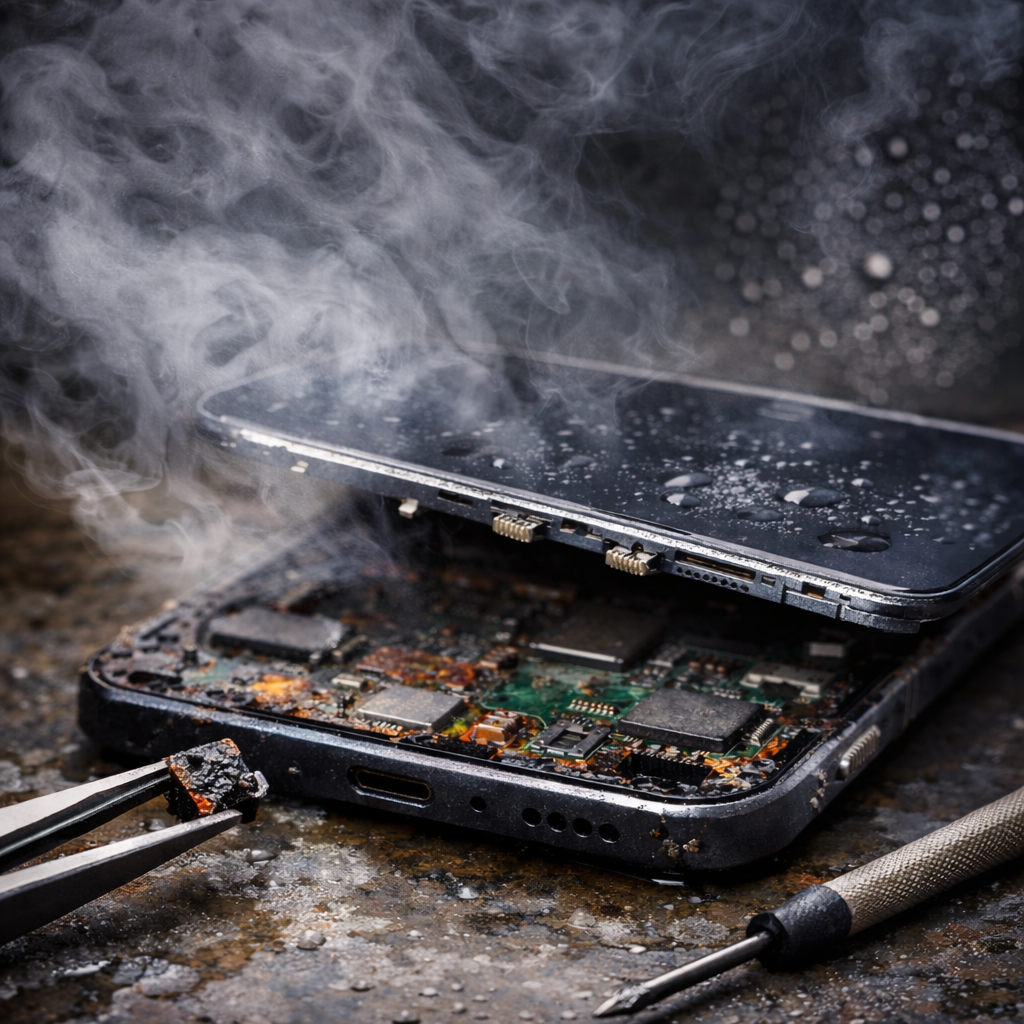
Most people think phone water damage only happens when a device takes a swim. That’s not what we see at the repair bench. Phones come in every week with corrosion, shorted components, and failing screens—even though they were “never dropped in water.”
After years of hands-on diagnostics and board-level repair, one culprit shows up again and again: pocket humidity. Moisture trapped in pockets, bathrooms, gyms, and kitchens slowly works its way inside your phone, causing damage long before any warning appears. This article breaks down how that happens, why steam is especially dangerous, and what you can realistically do about it.
Section 1: Topic Overview
What “Pocket Humidity” Really Means
Pocket humidity isn’t a buzzword—it’s a real environmental condition. Phones are often stored in warm, enclosed spaces like pants pockets, purses, or gym bags. When heat from your body combines with ambient moisture, it creates condensation.
Modern smartphones are not airtight. Even models with water-resistance ratings rely on seals that degrade over time. According to Apple’s own support documentation, water resistance decreases with normal wear, making phones increasingly vulnerable to humidity and vapor exposure.
Steam is even worse. Unlike liquid water, vapor penetrates tiny gaps around speakers, microphones, SIM trays, and charging ports. Once inside, it condenses onto internal components.
Section 2: Key Points or Information
How Steam Causes Internal Phone Damage
Steam damage is deceptive. The phone may work fine for weeks or months before problems appear. Internally, however, moisture triggers oxidation on connectors and microchips. Over time, that corrosion leads to:
- Random shutdowns
- Touchscreen failures
- Charging issues
- Camera fogging
- Logic board shorts
At our repair counter, phones exposed to frequent bathroom steam often show corrosion patterns identical to liquid submersion—even though the owner never dropped the device.
Real-World Repair Observations
We regularly open phones where the Liquid Contact Indicator (LCI) hasn’t fully triggered, yet corrosion is clearly present on the board. This is common with pocket humidity exposure because moisture levels stay just below the threshold needed to trip visible indicators.
Devices used by contractors, fitness instructors, and kitchen staff are especially vulnerable. Constant temperature changes accelerate internal condensation cycles.
Section 3: Practical Advice or Recommendations
How to Reduce Pocket Humidity Damage
While no phone is immune, a few habits dramatically reduce risk:
- Avoid bathrooms and showers: Don’t bring your phone into steamy environments, even briefly.
- Let your phone breathe: Remove it from pockets after workouts or long periods of heat exposure.
- Use protective cases wisely: Some waterproof cases trap humidity inside once moisture gets in.
- Dry immediately: If your phone feels warm and damp, power it down and let it air-dry in a cool place.
If you notice charging issues, screen glitches, or fog under the camera lens, don’t wait. Early diagnostics can prevent board-level failure. A professional inspection from a trusted phone repair service—like those available through CT Fix Wireless—can catch corrosion before it spreads.
Section 4: Conclusion and Final Thoughts
Pocket humidity is one of the most overlooked causes of smartphone failure. Steam and trapped moisture quietly degrade internal components until the damage becomes unavoidable—and expensive.
Understanding how environmental moisture works helps you make smarter decisions about phone storage, daily habits, and early repairs. Awareness alone can add years to a device’s lifespan and save you from sudden, unexplained breakdowns.
FAQs
Can steam really damage a phone even if it’s water-resistant?
Yes. Water resistance is designed for splashes, not prolonged vapor exposure. Steam penetrates seals more easily than liquid water.
Why didn’t my phone’s water indicator turn red?
Humidity exposure often stays below the indicator’s activation threshold while still causing corrosion over time.
Is pocket humidity worse in winter or summer?
Both. Summer heat increases moisture, while winter temperature shifts cause condensation when moving between cold and warm environments.
Should I use silica gel or rice?
They can help with minor moisture, but they won’t reverse corrosion. If symptoms appear, professional evaluation is strongly recommended.